Whether in ecommerce or brick-and-mortar retail, trade marketing makes sure customers notice your brand on channels you don’t manage yourself. The better you present your products to your retail partners, the more successful your placement will be at the point of sale (POS). Learn how to reach your trade marketing goals more easily and how trade marketing tools can support you.
Definition: What is trade marketing?
Trade marketing, or retail trade marketing, refers to strategies and tactics that strengthen product sales with the help of retail partners.
Brands and retailers depend on one another:
Retailers, wholesalers, and distributors need products from manufacturers, so they can offer customers an attractive assortment that motivates purchases.
Goals and benefits of trade marketing
Competition for product placement at retail is intense, especially when it comes to shelf space in supermarkets.
If your company runs strong trade marketing, you are rewarded with a close connection between your brand and the stores where your target audience likes to shop. If you establish yourself as a preferred supplier among retailers, the chances increase that your products will be carried by as many retailers as possible.
Success in trade marketing is reflected in:
well-thought-out product placement, based on data, target group insights, and category management,
more efficient teamwork, because marketing, sales, and product management follow shared processes,
smooth workflows from product launch to sell-through, thanks to centralized data, clear responsibilities, and modern tools.
Effective trade marketing helps your products stand out from the crowd and gives you an edge over your competitors, which is why it’s a key growth lever for many brands.
How does successful trade marketing work?
To ensure your products don’t end up just anywhere but exactly where your target group shops, analysis is essential. In trade marketing, the focus is on sales data and market insights that reveal consumer behavior and trends. This information is crucial for developing marketing strategies and deriving effective trade marketing measures.
Trade marketing also involves supporting retailers, for example, with information about your brand and products that helps drive sales. The better they understand your offer, the better they can place it and sell it.
A key area here is visual merchandising. The goal is to develop a visually coherent concept for your brand that makes it distinctive across physical and digital sales spaces.
Trade marketing vs. shopper marketing vs. retail marketing
In B2B marketing, a lot of terms get used interchangeably even though there are important differences. Here’s how trade, shopper, and retail marketing fit together.
The 5 most important trade marketing activities and examples
There are countless ways to draw retailers’ attention to your products and position your offering effectively at the POS. Here are typical activities trade marketing managers use.
1. Point-of-sale materials
Marketing materials such as shelf displays, posters, window decorations, standees, or product samples grab shoppers’ attention at the POS and help retailers market your products more effectively.
For example, beverage manufacturers can provide supermarkets with eye-catching refrigerated displays that feature integrated branding.
2. Category management
This activity is about finding the optimal placement for your products at the POS. It requires analyzing sales figures and customer feedback, as well as close collaboration between your company and your retailers.
Together, you optimize the placement of your products on the shelf while focusing on customer needs. This not only increases your sales but also improves the overall profitability of the retailer’s category. A win-win situation.
3. Centralized provision of product data and media
The better product descriptions, technical data sheets, images, and application videos are structured and accessible; the more efficient retailers can use them in their online shops or catalogs.
For example, a household appliance manufacturer could use a DAM system together with a PIM to provide retail partners with up-to-date product images, data sheets, and installation instructions in multiple languages.
4. Training and education for retailers
Well-informed retailers can sell your products more convincingly. Trade marketing supports this with tailored learning content such as product training, e-learning courses, or digital knowledge bases.
For instance, a bicycle manufacturer can regularly offer digital product updates and short video tutorials to quickly communicate the key USPs of new models.
5. B2B retail marketing
In B2B, trade marketing focuses on increasing demand among retail partners. The goal is to promote sell-through while strengthening the sales partnership. Typical measures include customizable sales materials, co-branding campaigns, tailored content for retailer platforms, and joint online events.
Software providers, for example, can supply resellers with customizable landing pages, branding templates, and centrally managed media packages so they can promote products under their own name and tailored to their industry and target audience.
Digital trends in trade marketing
The customer journey is no longer limited to a single channel but spans multiple online and offline touchpoints. That’s why more companies are investing in digital trade marketing, so manufacturers and retailers can support each other and jointly improve the customer journey up to conversion and beyond. For example, manufacturers can provide not only high-quality product images but also SEO-optimized texts and video tutorials.
Whether the purchasing process starts on a retailer’s website or at the POS, your brand needs a consistent presence across all digital and physical channels. This also means that all advertising materials and product information must be aligned with.
How to keep control of your trade marketing materials
Trade marketing teams must be both strategic and creative. Their task is to analyze competition and target groups to derive sales-promoting measures. Their insights and ideas flow into trade marketing materials such as videos, apps, flyers, or business cards.
To help B2B marketing teams plan with more focus and work creatively, trade marketing tools take work off their plate and simplify their workflows. One suitable solution is digital asset management (DAM) for retail and brands from pixx.io.
Using DAM as a trade marketing tool
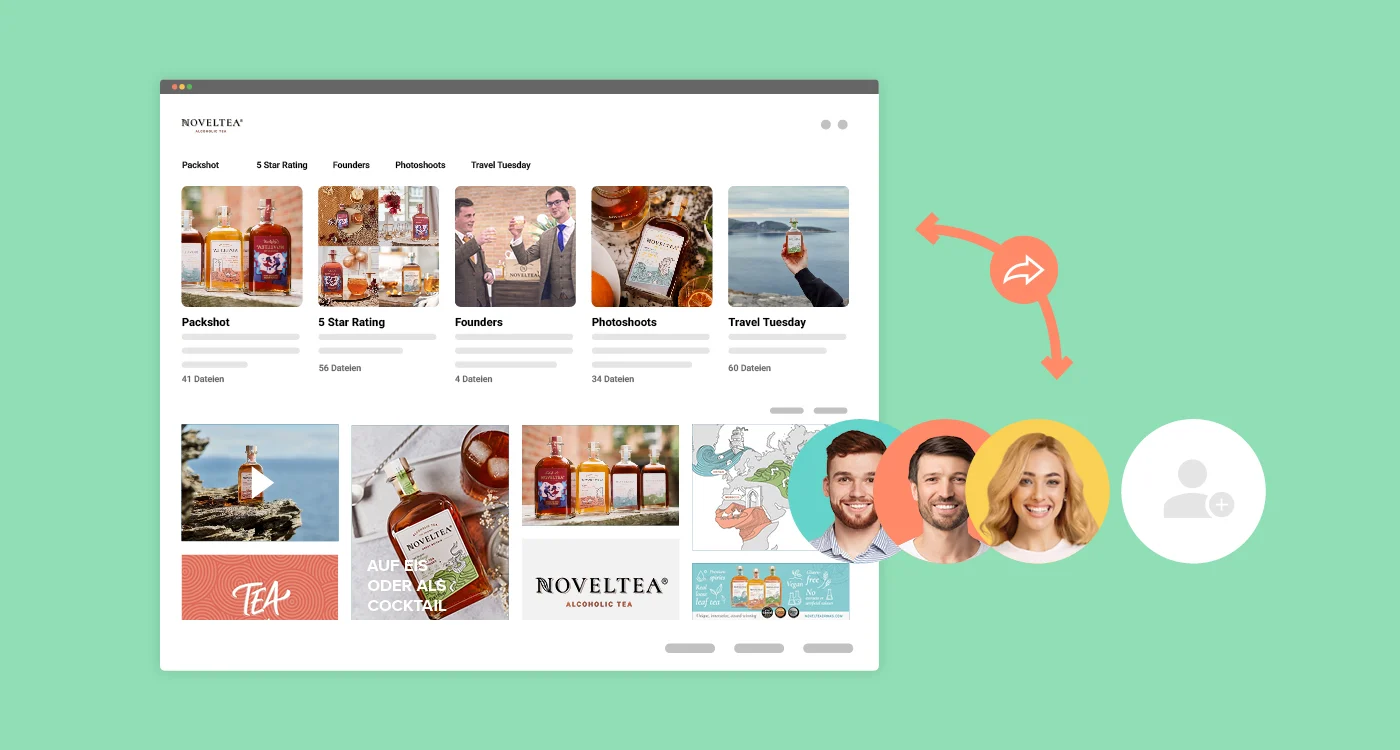
With a DAM system, you organize all trade marketing materials in one place and ensure they comply with your company’s style guide and brand CI. Approved materials can be shared directly with various retailers and partners from your central media library.
Product information and advertising materials are available in no time, which speeds up tasks such as launching new products. Inquiries from retailers who need more information can also be answered quickly. pixx.io’s intelligent search rapidly scans the metadata and keywords of thousands of files.
If you want to collaborate more easily with retailers and present your products in the best possible way in online and offline retail, try pixx.io now for free and without obligation and use the DAM system to support your trade marketing strategy.
Sabrina
Sabrina writes for pixx.io about everything that concerns you in your day-to-day work and helps you to overcome challenges in content and social media marketing, image formats or compliance. When it comes to complex topics, she prepares the knowledge of media and legal experts for you in an understandable way.