Digital asset management for e-commerce: Less stress, more flow
-
Metadata and collections made simple
-
Plug-and-play integrations and REST API
-
Enterprise-grade data security

Your benefits at a glance
Organize product content with ease
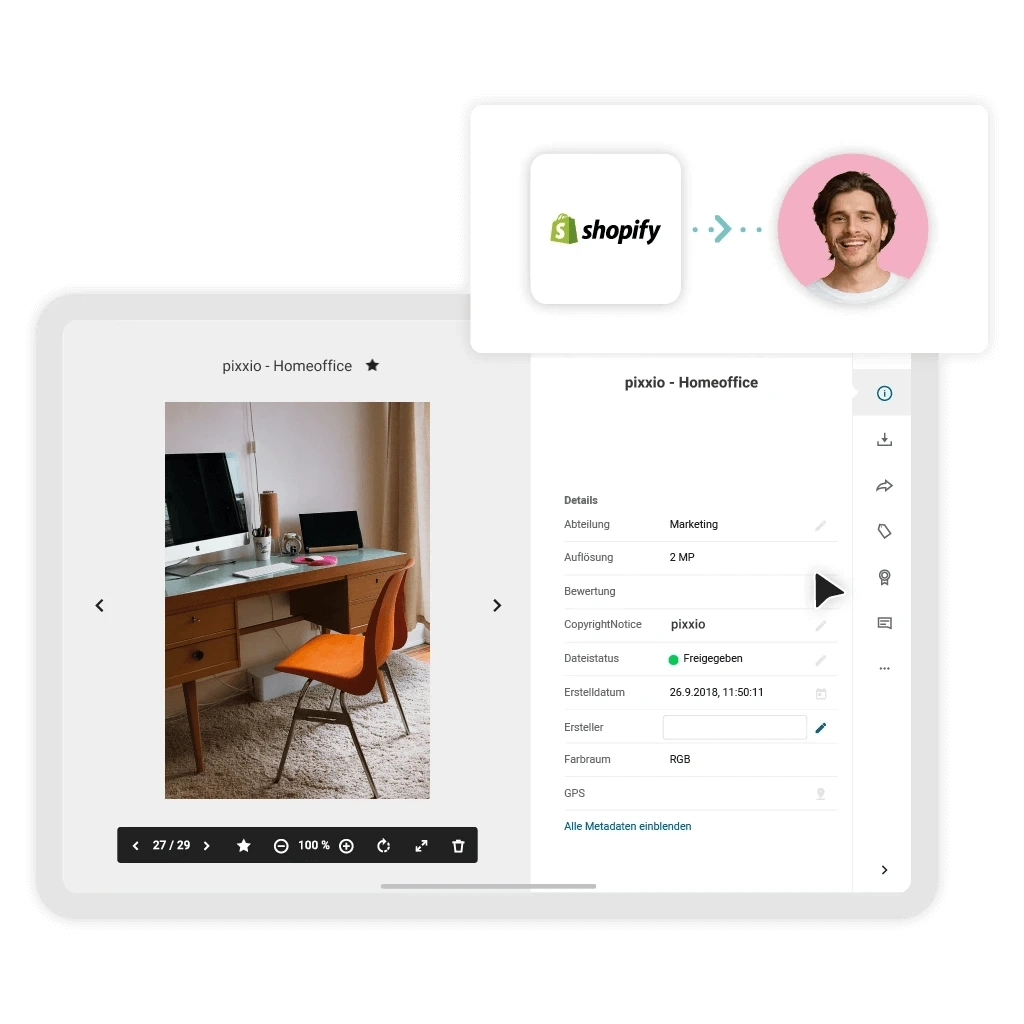
Keep control of your product images and videos with pixx.io - automatic tags, metadata, collections, and smart algorithms make it simple.
Boost partner collaboration
Share approved product assets easily with your team and e-commerce partners. No compromise on data security.
Scale your e-commerce workflows
pixx.io grows as you do. More orders, bigger goals? Just add more users, storage, and features.
1,600+ teams organize their product content with pixx.io







Overview Master social commerce and omnichannel
Brand loyalty Optimize your online marketing for e-commerce


Efficiency Scale your e-commerce workflows

Security Take the stress out of media management




Join 1,600+ brands and make selling easier with pixx.io


“pixx.io is a real gamechanger for us in terms of media management. Via pixx.io, we make image data available to our customers all over the world. This ensures that the relaunch of the Underberg brand can be rolled out globally and uniformly. The PowerPoint integration, for example, allows me to search for files super fast directly in the interface. With one click, the desired image is then directly in the appropriate format in my slide. This is not only practical and efficient, but also really fun to work with.”

Lukas Stötzner
Produktmanager


“The complete management process is simply more comfortable, and all our media files are just in one place now.”

Carsten Giermann
Head of Sales, authentic sports & toys


“Through pixx.io we can ensure an easy and efficient workflow in content production. We primarily implement pixx.io in our production of educational videos and exercises.”

Kathrin Brandt
Teamlead Creatives, sofatutor GmbH
FAQ
What is a DAM system?
DAM stands for Digital Asset Management. A DAM system is a tool dedicated to managing media and optimizing workflows for digital assets (like images, videos, PDFs and more.
Why purchase a DAM system?
With a DAM system, you save time on media management. Instead of spending hours searching for media or feedback, a DAM system puts everything at your fingertips with metadata, filtering, and tagging.
What’s the business case for a DAM system?
The main reason to use a DAM is productivity. Instead of wasting hours digging through folders, teams that use a DAM tool find files in seconds. That time saved translates directly into cost savings—studies show a DAM delivers an average ROI of 280% for small teams. On top of that, 74% of users report significantly less stress once they stop hunting for files.
But there’s more:
• Compliance: Avoid legal risks by automatically blocking access for assets with expired licenses.
• Consistency: Keep your brand image aligned across every channel and every department.
• Collaboration: Streamline feedback and content approvals to speed up production.
But there’s more:
• Compliance: Avoid legal risks by automatically blocking access for assets with expired licenses.
• Consistency: Keep your brand image aligned across every channel and every department.
• Collaboration: Streamline feedback and content approvals to speed up production.